
Your Marketing Concierge
Marketing should feel coordinated, not chaotic.
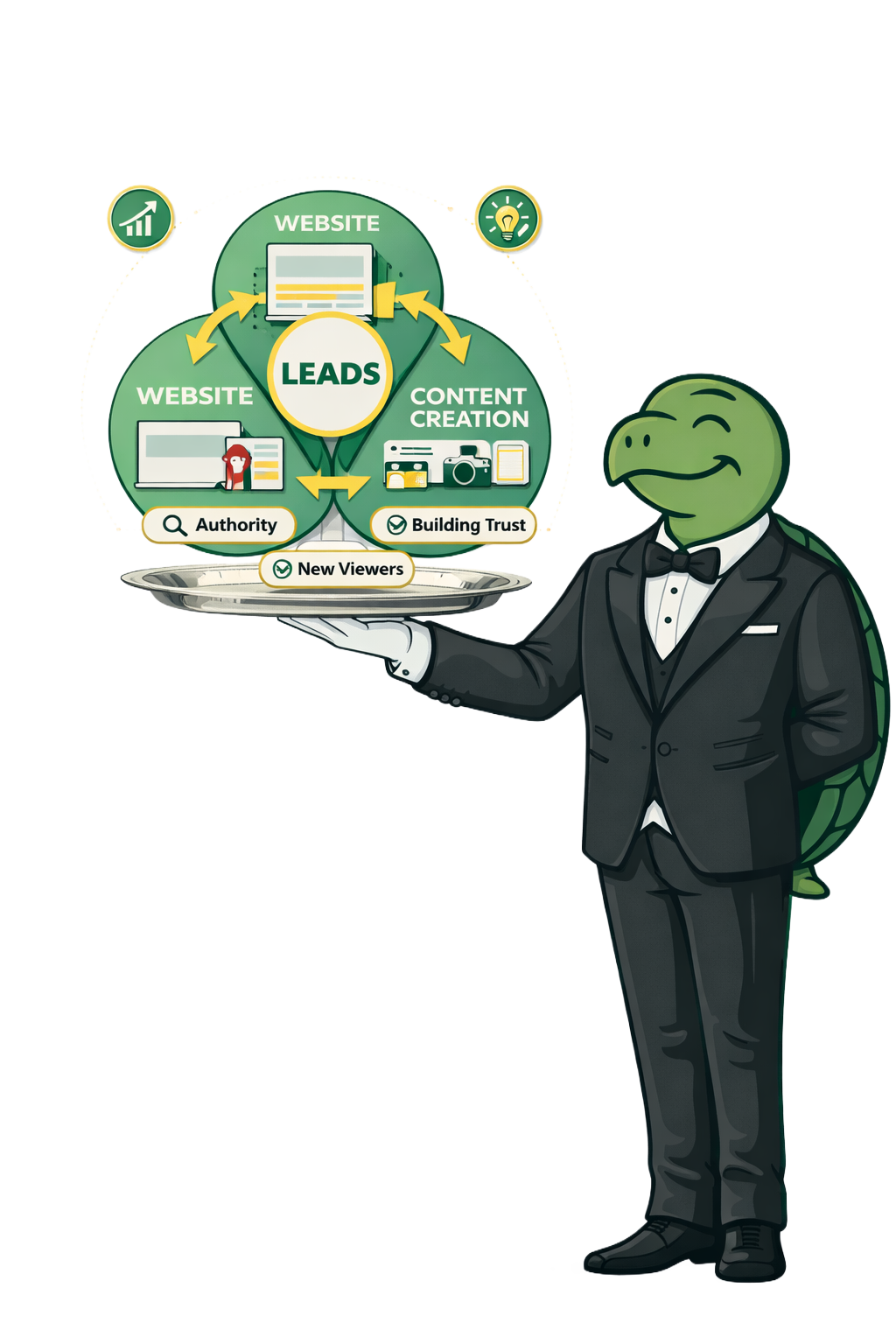
A Marketing Concierge is the system that makes your brand experience smooth from the first impression to the sales conversation. Instead of isolated tactics, you build a connected set of assets and channels that work together, so every effort supports the next.
When it is done right, a single piece of work pulls more than one lever. One strong page can attract search traffic, support sales calls, feed retargeting, and give your emails something real to say. The result is demand you can predict, not spikes you have to chase.

What is a Marketing Concierge?
A Marketing Concierge is the operating layer that coordinates your growth. It is not “more marketing.” It is marketing that is managed like an experience, where discovery, trust, and next steps are designed to flow instead of forcing people to figure it out on their own. When it works, your brand feels clear and easy to engage with. When it does not, you end up paying more for attention, losing leads after they show interest, and guessing why revenue is inconsistent.
Key Components

Content Creation
Content is your proof library. It is the thing that makes a stranger understand you and believe you without needing a meeting first. A concierge uses content to answer intent, remove doubt, and arm every other channel with something worth distributing.

Lead Magnets
Lead magnets are the value exchange that turns anonymous interest into a known contact. A concierge designs them to do two jobs: earn trust quickly and sort people by intent, so follow-up is relevant instead of generic.

Analytics
Analytics is the logbook. It shows what is pulling weight, what is wasting time, and where people stall. A concierge uses it to diagnose friction and make focused adjustments, so performance improves by design, not by hope.

Search (SEO/GEO)
Search is how high-intent buyers locate you when they are already looking for an answer. A concierge treats search as long-term visibility, not a one-time campaign. The goal is consistent discovery that lowers acquisition cost and raises lead quality over time.

Website
Your website is the lobby. It is where people decide if you are credible, what you actually do, and whether the next step feels safe. A concierge builds the site to guide attention, capture the hand-raise, and make the path forward obvious.

Digital Advertising
Advertising is priority placement. It lets you control visibility, accelerate learning, and scale what already has signal. A concierge uses ads to amplify winners and fill gaps, not to compensate for a weak message or a leaky website.

Social Media
Social is ambient presence. It is not just posting. It is repeated exposure that builds familiarity and social proof, so your brand feels known before the first click to your site. A concierge uses social to distribute assets, reinforce positioning, and keep you top-of-mind.

Lead Nurturing
Nurturing is the personal follow-up. Most leads do not buy on the first interaction, even when they are qualified. A concierge keeps the relationship warm, answers objections over time, and prevents “not yet” from turning into “forgotten.”
Scales and types
Marketing ecosystems exist at many scales—from a single product launch or micro-community to a full brand portfolio or category. The more ecosytems you stack, the healthier your over all marketing environment will be.
What shapes a marketing ecosystem?
- Macro climate: Economy, culture, technology shifts, policy, platform changes.
- Resource availability: Budget, time, talent, creative assets, data quality.
- Participant interactions: Competition, co-marketing, affiliates, channel partners, creator relationships, community norms.
- Disturbance regime: Algorithm updates, PR crises, supply constraints, product incidents, seasonal shocks.
- Leadership & values: Strategic choices, brand promise, pricing strategy, and tolerance for experimentation.
The T.R.A.V. Philosophy
T.R.A.V. is the concierge’s order of operations. It keeps you from doing random marketing and calling it strategy.You build the foundation first, then earn visibility, then establish preference, then scale. That sequence matters because it prevents you from buying attention before you have something that converts and retains trust.Set the direction, build the assets, guide attention through a clear path, measure the truth, then scale what proves it works.


Technolgy
Technology is the operating system. The point is not “industry standard.” The point is a stack that supports clean tracking, clean handoffs, and the ability to scale without breaking the experience.
Reach
Reach is controlled exposure. It is how you get in front of the right people through search, content distribution, social, email, PR, and partnerships, so you are not dependent on one channel or one spike.

Authority
Authority is preference. It is the proof that makes buyers choose you before the sales conversation starts. It comes from sharp positioning, strong assets, and evidence that holds up when prospects compare options.

Volume
Volume is scaling what already wins. More output, more distribution, and more spend only after you have signal. The goal is growth that stays profitable, not activity that looks busy.
FAQs
A funnel describes stages. A concierge system describes coordination. It shows how assets and channels support each other so effort compounds instead of resetting every campaign.
It is a prioritization sequence: get the operating system right, earn visibility, build preference, then scale. If it does not strengthen one of those, it is not the priority.
You run one backlog, one measurement loop, and one definition of success. Every week you ship, measure, adjust. If it does not move the goal, it does not ship.
Early wins come from removing friction and tightening the path. Compounding wins come from stacking assets that keep producing after they are published.
You scale the winners, not the guesses. Increase one variable at a time and measure downstream outcomes like qualified conversations and pipeline, not just clicks.
Agree on what “qualified” means, define handoff rules, and keep one shared view of performance. Clarity removes blame and forces improvement.
You build redundancy. Search, email, partnerships, and paid each do a different job. If one dips, the system still produces and you learn where to tighten.
Yes. Structure sets the target. Creativity wins attention and trust. The system prevents creativity from being wasted on assets that never get used.
Assets that keep working, an audience you own, lower acquisition costs, and a pipeline you can forecast because it is driven by a system, not luck.
Track outcomes: qualified leads, meetings booked, pipeline created, revenue. Use everything else only to explain changes in those outcomes.